Mastering Body Position for Sand
The most fundamental shift when moving from hard terrain to soft sand is your body position. You must stand up on the pegs, but instead of the neutral central position, you need to shift your weight further back. By moving your hips toward the rear of the seat, you take the weight off the front wheel, allowing it to float on top of the sand rather than knifing in and causing a wash-out. Keep your knees squeezed against the tank to maintain stability and let the bike move beneath you without losing control.
While your weight is back, your arms should remain relaxed but firm. Avoid a 'death grip' on the handlebars, as the front wheel will naturally hunt and wiggle as it seeks the best path through the sand. If you fight this movement too aggressively, you’ll tire yourself out within minutes. Instead, use your legs to steer the bike and keep your upper body loose to absorb the feedback from the terrain. This dynamic posture is the key to surviving long days in the Erg Chebbi dunes.
The Power of Momentum and Throttle Control
Momentum is your best friend in the desert. In sand, speed equals stability; the moment you slow down too much, the tyres begin to sink, and the bike becomes heavy and difficult to maneuver. You must maintain a steady, positive throttle to keep the front wheel light. When you see a patch of particularly soft, fine sand, a quick burst of power can help the bike skip across the surface. Never wait until you are stuck to apply gas; anticipation is the secret to smooth riding.
Shifting gears correctly is equally vital. Generally, riding one gear higher than you think you need helps prevent the rear wheel from spinning excessively and digging a hole. You want to use the torque of the KTM enduro fleet engine to pull you forward. If you feel the bike starting to bog down, don’t just pin the throttle—this often just buries the rear wheel. Instead, try to find a rhythm where the engine is humming in its powerband, providing consistent drive without erratic wheelspin.
Climbing and Cresting Large Dunes
Approaching a large dune requires a blend of commitment and caution. You need enough speed to make it to the top, but you must be prepared for what lies on the other side. As you ascend, keep your weight back and maintain a steady throttle. As you approach the crest, slightly roll off the power to avoid launching the bike into the air, as many dunes have steep 'slip faces' on the leeward side. You want to reach the top with just enough momentum to peer over before deciding your line.
If you realize you aren’t going to make it to the top, never try to turn the bike around mid-slope on a steep incline. This almost always leads to a tip-over. Instead, carefully ride the bike straight back down or lay it down on its side if necessary. Once you are back on level ground, you can gather your breath and try again with a bit more speed or a different line. Riding dunes is as much about reading the shadows and the sand’s texture as it is about mechanical skill.
Vision and Choosing the Best Line
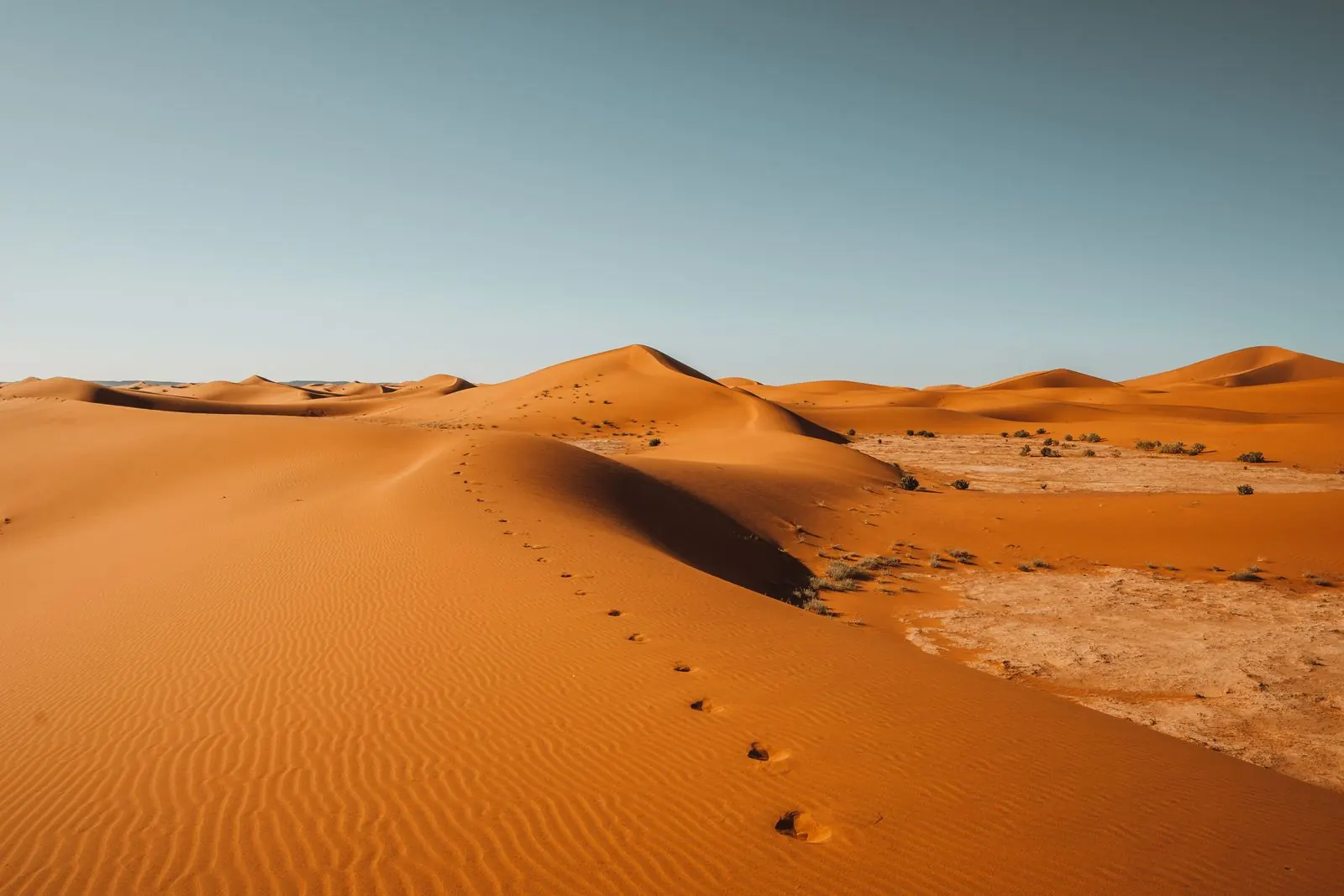
Where you look is where you go, and this is never truer than in the Sahara. You must look far ahead, scanning the horizon for the best path through the dune field. Look for the 'harder' sand, which is often found on the windward side of the dunes, and avoid the dark shadows which indicate steep drops or very soft pockets. By planning your route several hundred meters in advance, you can maintain your momentum and avoid unnecessary obstacles that might force you to stop.
Navigating through Erg Chebbi also involves understanding the wind's effect on the landscape. The windward side is usually packed firmer and easier to ride, while the leeward side is where the soft, powdery sand accumulates. Our guides always recommend following the natural flow of the dunes, zigzagging across the ridges rather than trying to take a direct, vertical line over every peak. This approach saves energy and provides a much more fluid and enjoyable riding experience for everyone in the group.
Braking and Stopping Techniques
Braking in deep sand is vastly different from braking on gravel. The sand itself provides a significant amount of natural resistance, so often just rolling off the throttle will slow you down considerably. Use the rear brake gently to settle the bike, but be extremely cautious with the front brake. Grabbing a handful of front brake in soft sand will almost certainly cause the front wheel to tuck, sending you over the handlebars. Practice using the engine's compression to manage your speed during descents.
When it comes time to stop, always look for a downhill slope or at least a flat, firm area. Never stop while heading uphill, as you will find it nearly impossible to get moving again without digging in. As you come to a halt, give the bike a final little blip of throttle to clear the sand from the tyres and then kill the engine. This small tip ensures you are sitting on top of the sand rather than buried in it, making your next departure much easier and less strenuous.
Frequently asked questions
Do I need to be a professional to ride the dunes in Merzouga?
Not at all! While dune riding is challenging, our KTM enduro fleet and expert guides make it accessible for intermediate riders. We start with basic techniques on smaller dunes before progressing to the larger ones.
What happens if I get stuck in the sand?
Getting stuck is part of the experience. Our guides will teach you how to 'walk' the bike out or tip it onto its side to fill the hole with sand. You’ll never be left to struggle alone in the heat.
Is riding in the Sahara very tiring?
Yes, sand riding is physically demanding. It uses muscle groups you might not use on the road. We recommend a good level of fitness and taking frequent hydration breaks to stay sharp.