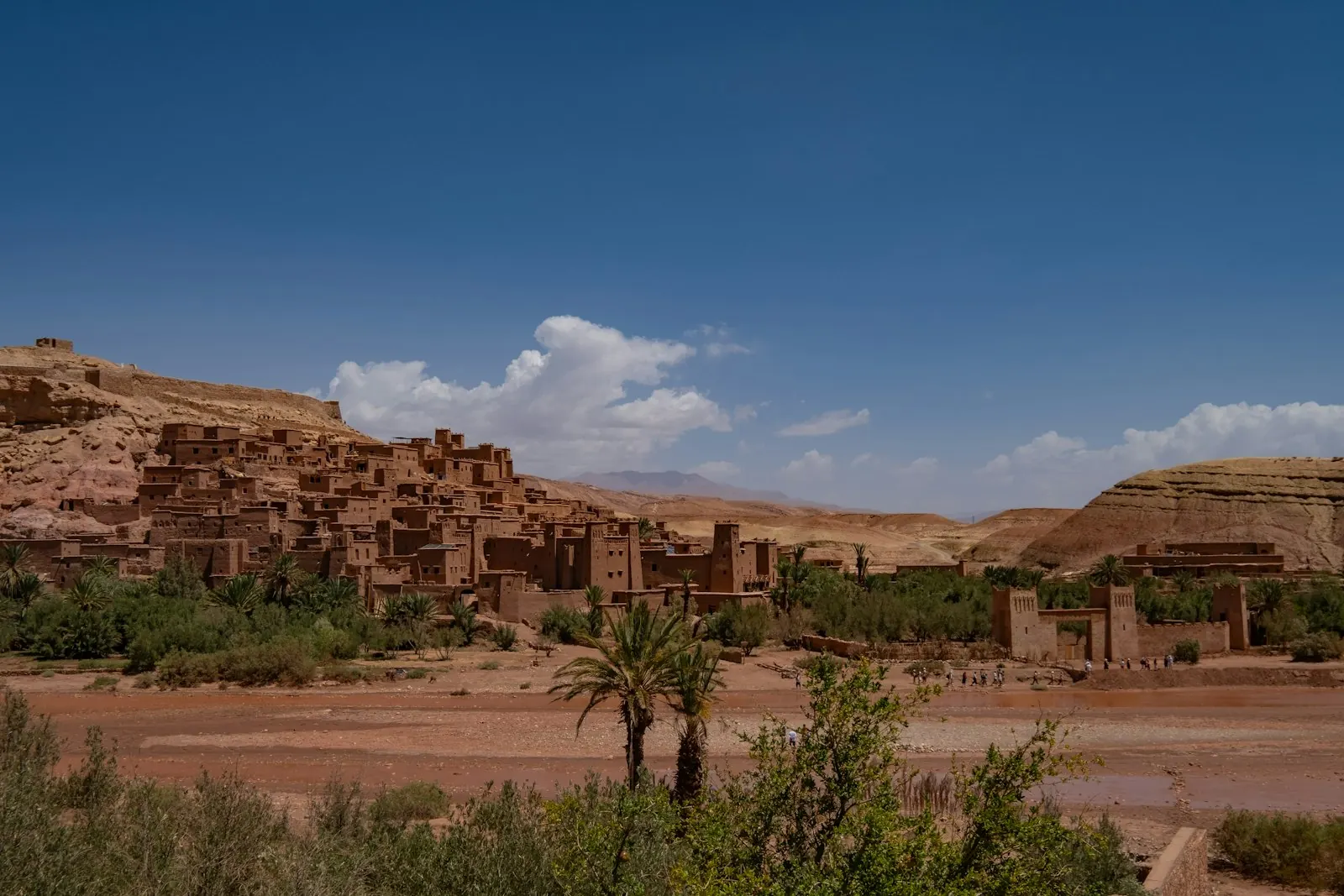
Masters of Mud-Brick Architecture
The kasbahs and ksour are triumphs of sustainable, local architecture. Constructed primarily from mud, straw, and water, they are perfectly designed for the desert climate. The thick walls provide excellent natural insulation, keeping the interior cool during the heat of the day and warm during the cold desert nights. It is an ingenious, low-impact design that has stood the test of time.
Every structure has a story. Whether it is a family kasbah or a larger, communal ksar (a fortified village), these buildings reflect the social and historical needs of their time. They were built for defense, community living, and the protection of resources in a challenging landscape. Walking through their narrow, winding alleys is like stepping into a different era, where architecture served both life and survival.
Ksar: The Fortified Village
A ksar is essentially a fortified village, a self-contained community protected by high walls and watchtowers. Within these walls, you will find a maze of houses, storehouses, mosques, and public spaces, all designed to foster community interaction and provide security. These structures are the ancestral homes of many people in the region and are central to their cultural identity.
Exploring a ksar is a journey into history. You can see the remnants of traditional social structures, from the central meeting place to the intricate defensive systems. Many of these ksour are now being restored and protected, allowing visitors to appreciate their architectural grandeur and historical importance. They are vital pieces of Morocco’s rich, cultural, and built heritage.
The Intricate Beauty of Kasbahs
Kasbahs were often the residences of local leaders or important families, designed to be both functional and impressive. Their architecture is characterized by elaborate geometric decorations, carved doorways, and sturdy battlements that reflect the wealth and status of the occupants. Each kasbah is unique, offering a glimpse into the diverse styles and local traditions that define the region’s architecture.
Today, many kasbahs are being converted into guesthouses, offering a unique opportunity to stay in a piece of history. Sleeping behind thick, earthen walls, surrounded by authentic decor, is a highlight of many trips to Morocco. It provides an immersive experience that goes beyond simply sightseeing, allowing you to live within the walls that have sheltered generations for hundreds of years.
Preserving a Built Legacy
The kasbahs and ksour are under threat from the elements and the passage of time. Earth-based structures require regular maintenance, and the abandonment of some villages is accelerating their decay. However, there is a growing movement to preserve these architectural treasures. By visiting and supporting local preservation efforts, we help ensure that these magnificent structures remain for future generations.
Exploring these sites is one of the most enriching experiences of our tours. They add a historical dimension to your adventure, grounding your experience in the deep culture of the Moroccan interior. It is a reminder of the ingenuity and resilience of the people who shaped this landscape. We encourage you to take the time to appreciate the beauty and significance of these earthen wonders.
Frequently asked questions
Are all kasbahs open to the public?
Many are private homes, but several historic kasbahs and ksour are open to visitors and some have been converted into guest houses.
Is it okay to climb on the ruins?
Please be respectful and avoid climbing on fragile structures, as they are part of a valuable cultural heritage that needs protection.