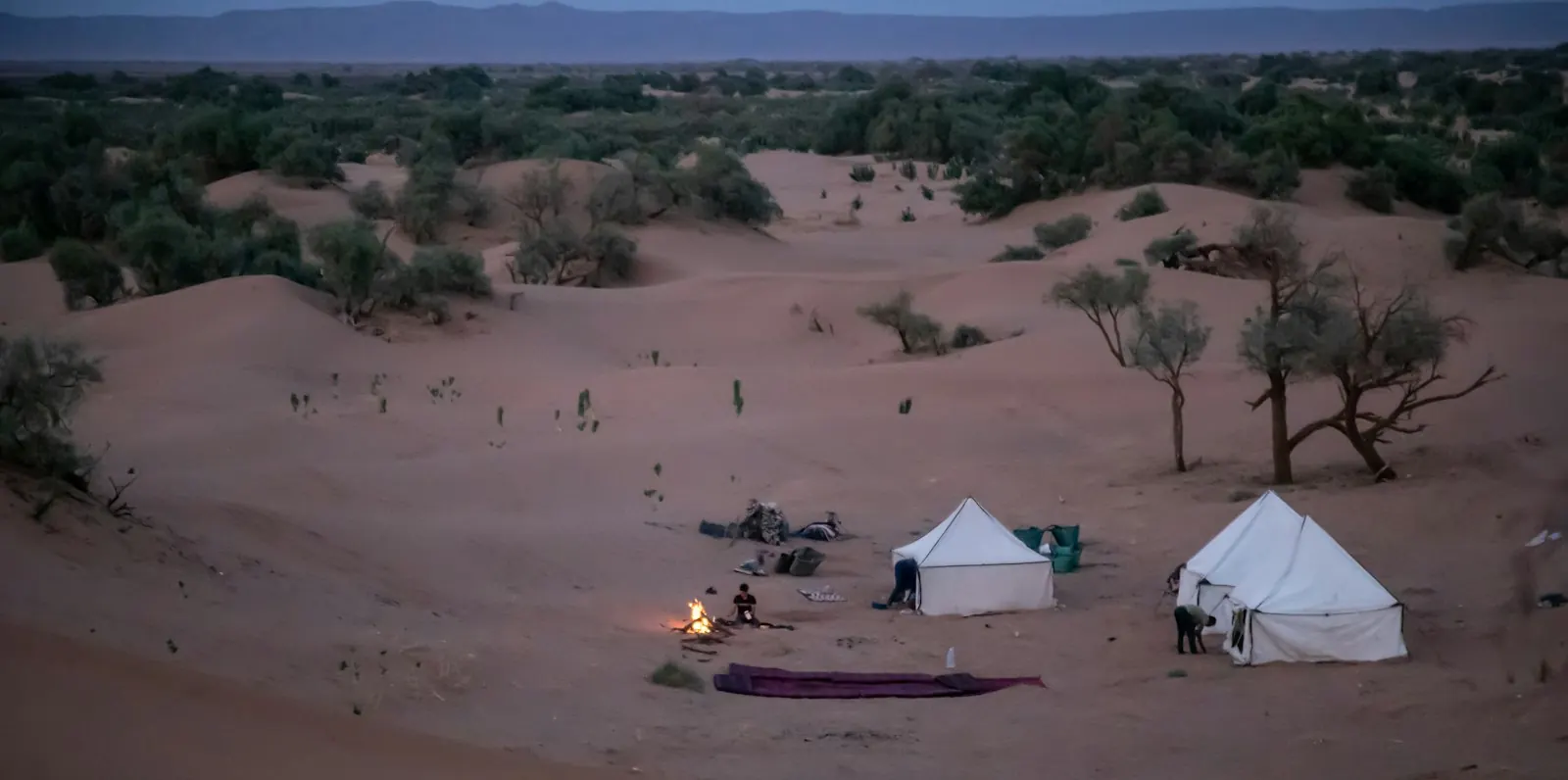
A Life in Motion
Nomadism is not just a lifestyle; it is a philosophy of freedom and adaptation. Moving with the seasons, nomadic families have traditionally followed the availability of water and grazing land for their livestock. This constant mobility requires an intimate knowledge of the desert environment, including its weather patterns, terrain, and the location of hidden wells, passed down through generations.
Today, while some nomadic families are settling into more permanent structures, the essence of the nomadic spirit remains. They continue to live with what they need, valuing simplicity and community over material wealth. The tents, often made of woven camel or goat hair, are masterfully constructed to provide shelter from both the intense sun and the cold nights, reflecting centuries of practical design.
The Role of Livestock
Livestock, particularly camels, goats, and sheep, are central to nomadic life. They provide food, milk, and wool, serving as both a source of sustenance and a vital economic asset. The care and management of these animals is a full-time commitment, deeply woven into the daily rhythm of life. It is common to see herds grazing in the scrubland, attended to by family members.
Seeing a nomadic herd moving across the dunes is an unforgettable sight. It highlights the endurance and resilience of both the animals and the people who guide them. These animals are perfectly adapted to the harsh conditions, surviving on sparse vegetation and limited water. They are essential companions, representing the deep, symbiotic relationship between the nomads and the life of the desert.
Resilience in a Changing World
Nomadic communities are facing significant changes in the modern era. Climate change, the encroachment of settlements, and shifts in traditional trade routes are all challenging this centuries-old way of life. Despite these pressures, they remain remarkably adaptable, blending traditional knowledge with new opportunities, such as hosting desert travelers and sharing their culture with visitors.
Engaging with nomadic families is a humbling and eye-opening experience. It provides a deeper appreciation for the value of resources like water and the importance of community support. Their stories are a testament to the power of human spirit and the ability to thrive in even the most challenging environments on earth. It is a reminder of what truly matters in life.
Learning from the Nomads
There is so much to learn from the nomadic approach to life. Their emphasis on minimalism, community, and respect for nature offers a powerful alternative to the fast-paced, material-focused culture of the modern world. By spending time in their company, even briefly, you gain a new perspective on your own life and the values you hold dear. It is a deeply transformative experience.
We encourage our riders to approach any interactions with nomads with respect and genuine interest. Take the time to listen, learn, and appreciate their unique heritage. It is a privilege to witness their way of life in the vast, open expanse of the Sahara. Their resilience and warmth are the true heartbeat of the desert, making every tour a journey of discovery that extends far beyond the trail.
Frequently asked questions
Is it okay to visit nomadic tents?
Always ask your guide to facilitate any visit. It is important to approach with respect and a small gift for the family.
How can I support nomadic communities?
Buying handmade goods directly from families or contributing to local community funds are great ways to provide support.