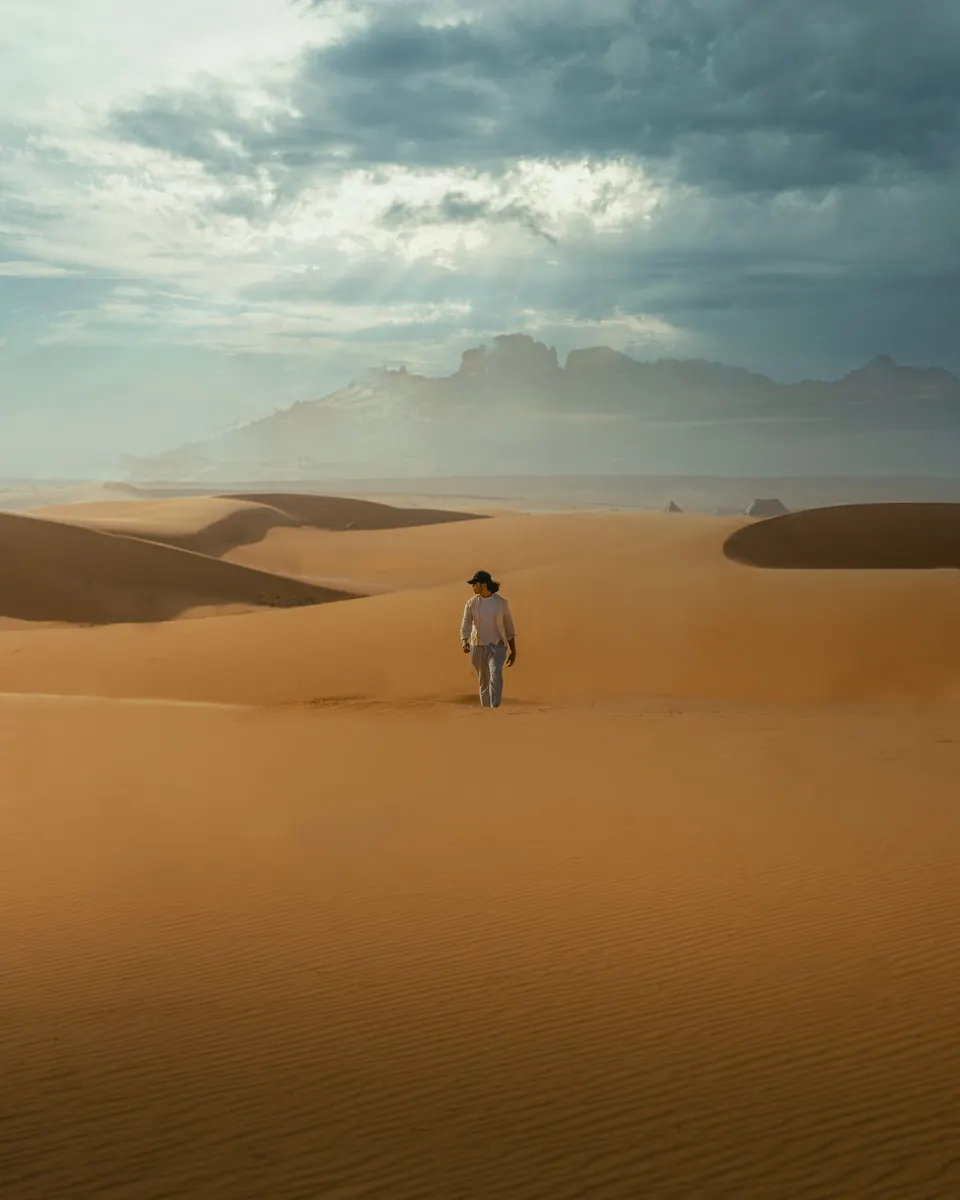
The Magic of a Saharan Sunset
The experience usually begins as the late afternoon sun starts to dip toward the horizon. The colors of the dunes shift from brilliant gold to deep ochre and soft pink. Arriving at your bivouac by motorcycle or camel as the shadows lengthen is a cinematic experience. Once at the camp, most travellers climb the nearest high dune to watch the final moments of daylight. The vastness of the Sahara is never more apparent than during this peaceful transition from day to night.
As the sun disappears, the temperature begins to drop, and the first stars appear. In the desert, away from city lights, the sky is incredibly clear. You can often see the Milky Way with the naked eye, a sight that is increasingly rare in the modern world. The stillness is profound, broken only by the sound of the wind or the distant call of a desert fox. It is a moment of pure reflection and awe that defines the Saharan camping experience for many.
Traditional Hospitality and Food
Evenings in a desert bivouac are centered around Moroccan hospitality. A traditional dinner is served, usually featuring a slow-cooked tajine, fresh bread, and Moroccan mint tea. Eating together under a large communal tent or out in the open air fosters a sense of camaraderie among travellers. The food is simple but flavorful, prepared with local ingredients that reflect the traditions of the Berber people who have called this desert home for centuries.
After dinner, it is common to gather around a campfire. Local hosts often play traditional drums and sing Saharan songs, sharing stories of the desert. This cultural exchange is a vital part of the bivouac experience, providing insight into the nomadic way of life. Even on our more rugged sahara-enduro-expedition-6-days, these moments of rest and connection are what make the journey more than just a ride; they make it a cultural immersion into the heart of Morocco.
Sleeping Under the Stars
Sleeping arrangements in a bivouac can range from basic wool-tents to high-end luxury suites with en-suite bathrooms. Traditional tents are made of thick camel hair or heavy canvas, which provide excellent insulation against the nighttime chill. Inside, you will find comfortable rugs and plenty of warm blankets. For the truly adventurous, dragging a mattress outside to sleep directly under the stars is an option that offers an unparalleled connection to the desert environment.
Waking up in the desert is just as magical as the night before. The pre-dawn light is soft and cool, and the desert is at its most quiet. Watching the sunrise over the dunes while sipping a hot coffee is the perfect way to start a new day of adventure. Whether you are preparing for another day on the KTM enduro fleet or heading back to civilization, the memories of a night spent in a Saharan bivouac will be among your most cherished travel experiences.
Frequently asked questions
Are there toilets in the desert camps?
Yes, most established bivouacs have basic toilet facilities, and luxury camps have full en-suite bathrooms.
Is it very cold at night in the tents?
It can be cold, especially in winter, but camps provide plenty of heavy blankets to keep you warm.
Do I need to bring my own sleeping bag?
Generally no, as bedding is provided, but a silk liner can be a nice addition for personal comfort.